The Resurrection Means This Life Matters
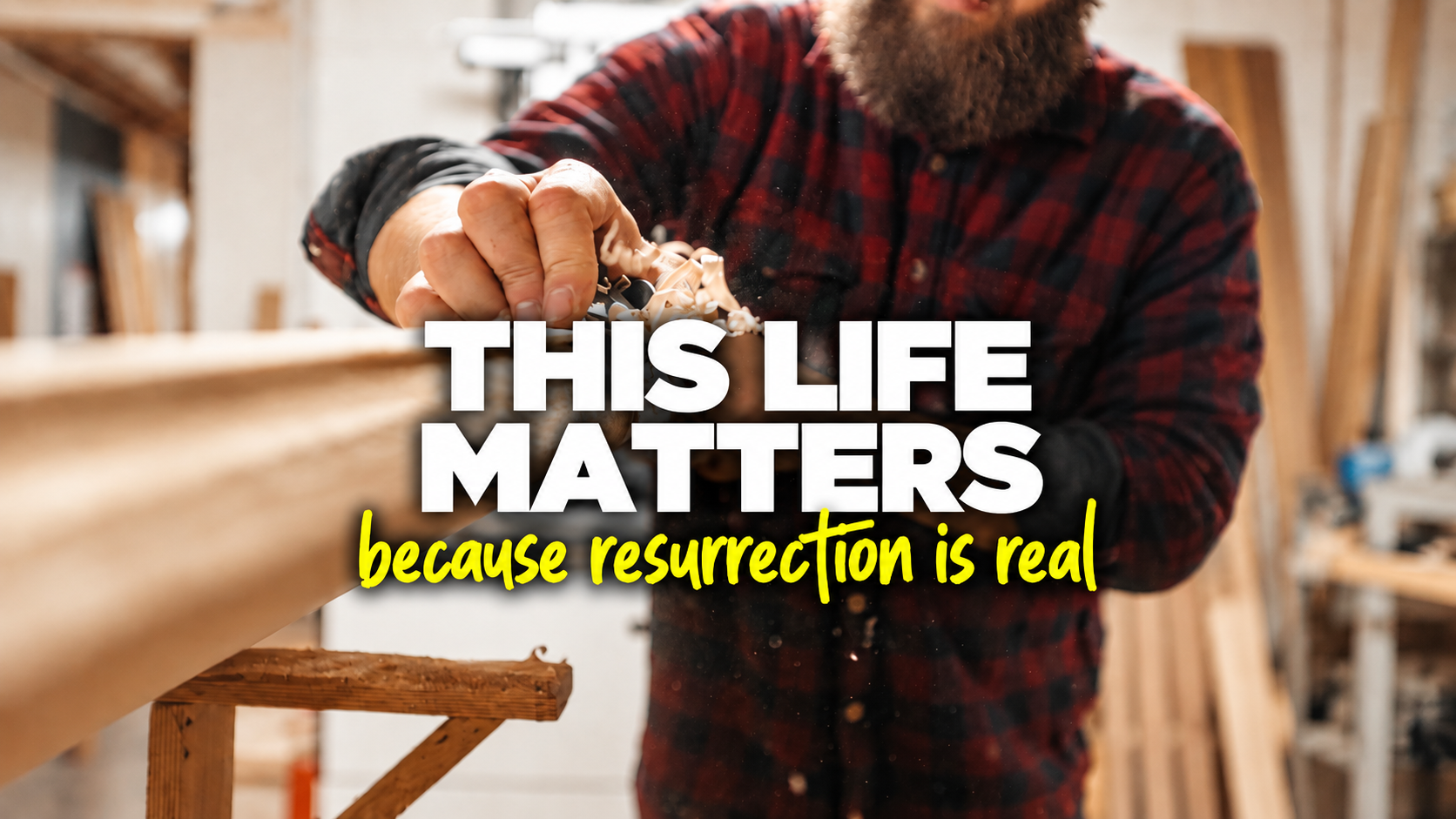
What do you picture when you think about eternity? For a lot of Christians, the answer probably involves heaven. Maybe you picture streets of gold. Maybe you imagine seeing people you love who have died. Maybe you picture yourself floating around somewhere in a spiritual existence far removed from this world. But the Bible’s picture of our future is actually much more physical than that.
And I think that matters—not just for what we believe about the future, but for how we live right now.
In 1 Corinthians 15, Paul spends an enormous amount of time talking about resurrection. Some Christians in Corinth apparently struggled to believe that the resurrection was actually going to happen. Paul’s response is basically, You cannot separate resurrection from Christianity. Jesus was raised from the dead, and because Jesus was raised, those who belong to him will also be raised.
That is one of the central hopes of the Christian faith.
Resurrection Is More Than Life After Death
Sometimes Christians talk about death as though our ultimate hope is that our souls leave our bodies and go to heaven forever. But that isn’t quite the future Paul describes. Paul talks about a resurrection. That means our ultimate hope is not escaping physical existence. It is God restoring it. We already have an example of what this looks like in Jesus.
After his resurrection, Jesus wasn't simply a ghost floating around Jerusalem. His friends could see him. Thomas could touch him. Jesus ate food with his disciples. There was continuity with the Jesus they had always known—they recognized him—but something had also dramatically changed.
His body had been transformed.
Paul uses the picture of a seed in 1 Corinthians 15. You put a seed into the ground, and what eventually grows looks very different from what you planted. Yet there is still continuity between the seed and the plant. In some mysterious way, Paul says, the same will be true of us. Our future bodies won't simply be our current bodies restarted. They will be our bodies transformed. They will be physical, but no longer subject to decay.
Mortal becomes immortal.
Perishable becomes imperishable.
Bodies that get sick, hurt, age, and die will become bodies that are finally beyond the reach of death. I cannot tell you exactly what that will look like. Paul probably couldn't have drawn us a diagram either. We are trying to understand eternal realities with finite minds.
But the direction Scripture points us is clear: God's plan is not to abandon his creation. God's plan is to redeem it.
Death Still Stings
Near the end of 1 Corinthians 15, Paul celebrates the day when death will finally be defeated.
“Where, O death, is your victory?
Where, O death, is your sting?”
Those are beautiful words.
But sometimes Christians use them in a way that makes it sound like death shouldn't hurt anymore.
It does.
Losing someone you love still stings. Grief is still painful. Funerals still hurt. Christian hope does not require us to pretend otherwise. Paul's point isn't that death has stopped hurting. His point is that death will not have the final word. There is coming a day when everything that death has taken will be swallowed up by the life of God.
Sin will not win.
Decay will not win.
Death will not win.
Jesus will.
And because of Jesus, those who belong to him will share in his resurrection.
So Get Your Head Out of the Clouds
Here is where Paul's teaching about resurrection becomes incredibly practical. After spending almost an entire chapter talking about this enormous future hope, Paul doesn't end by saying:
“Therefore, sit around and wait for heaven.”
He says the opposite.
“Always give yourselves fully to the work of the Lord, because you know that your labor in the Lord is not in vain.”
—1 Corinthians 15:58
In other words:
Get to work.
Sometimes our vision of eternity accidentally makes the present world seem unimportant. If we believe God's plan is simply to throw this place away and take us somewhere else, then why should anything we do here really matter? But resurrection tells a different story. God cares about what he created.
He cares about bodies. He cares about this world.
And somehow, the good we do in this life participates in the good God is doing in his creation.
That means praying with your kids matters. Caring for someone who is hurting matters. Serving refugees matters. Giving generously matters. Creating something beautiful matters. Having a meaningful conversation with a friend matters. Taking care of your body matters. Taking care of God's creation matters. Doing your job with integrity matters.
We don't always know exactly how these things connect to eternity. But Paul tells us they do.
Your labor in the Lord is not in vain.
Live Like Resurrection Is Real
Christian hope is not an excuse to care less about this life. It is a reason to care more. The resurrection tells us that God is not finished with his creation. He is restoring it. And if that is where history is headed, then every time we bring a little more goodness, justice, beauty, compassion, healing, or love into the world, we are living in the direction God's kingdom is going.
We aren't going to fix everything. Only Jesus can do that.
But we can participate in what he is doing.
So don't spend your entire Christian life staring toward heaven while ignoring the life God has placed in front of you. There is incredible hope waiting for us beyond death. But resurrection reminds us that this life matters too.
Your body matters.
This world matters.
The people around you matter.
And the good you do today is not wasted.
So get your head out of the clouds.
There is good work to do.
This blog post is based on a sermon from July 12, 2026 at CityRise Church | Bellaire. Use the chapter markers to navigate to the sermon at 26:04.